
Website Speed: Why Every Second Matters
- Jitendra kumar
- Jul 2
- 3 min read

Introduction
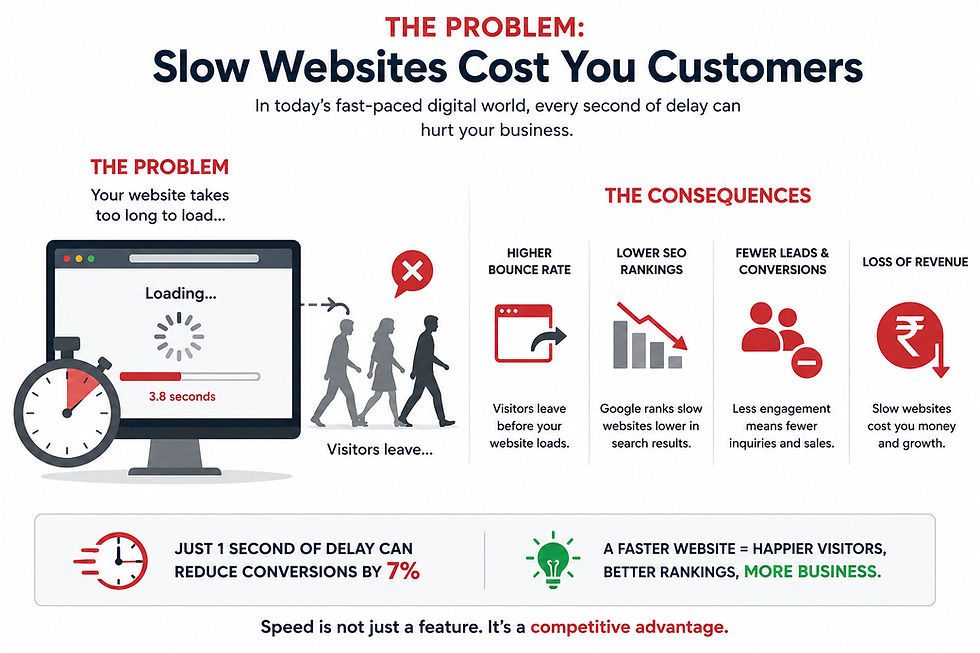
In today’s digital world, people expect websites to load almost instantly. Whether they’re shopping online, looking for information, or booking a service, users don’t like waiting. A slow website can lead to frustrated visitors, lower search engine rankings, and lost business opportunities.
Website speed is no longer just a technical consideration—it is a critical business factor. Every second of delay can affect customer satisfaction, conversion rates, and revenue.
In this article, we’ll explore why website speed matters, what causes slow websites, and how businesses can improve website performance.
What Is Website Speed?
Website speed refers to how quickly a webpage loads and becomes usable for visitors. It includes:
Time taken to display the first content
Time required for the page to become interactive
Total loading time of images, scripts, and other resources
A fast website provides a smooth experience, while a slow website often causes visitors to leave before the page finishes loading.
Why Website Speed Is Important
1. Better User Experience
Visitors expect websites to load within a few seconds.
If your website takes too long:
Users become frustrated
They leave before exploring your services
They may never return
A fast website creates a professional first impression and encourages users to stay longer.
2. Higher Search Engine Rankings
Google considers page speed as one of its ranking factors.
Fast websites are more likely to:
Rank higher in search results
Receive more organic traffic
Improve visibility for potential customers
A slow website can reduce your chances of appearing on the first page of Google.
3. Increased Conversion Rate
Website speed directly affects sales and lead generation.
For example:
Imagine an online store where customers have to wait several seconds before products appear.
Many visitors will abandon the website and purchase from a competitor instead.
The same applies to service-based businesses.
If your contact form loads slowly, potential customers may leave without making an inquiry.
4. Lower Bounce Rate
Bounce rate is the percentage of visitors who leave your website without interacting.
Slow websites often experience:
Higher bounce rates
Shorter session durations
Lower engagement
Fast websites encourage visitors to browse multiple pages and spend more time learning about your business.
5. Improved Mobile Experience
More than half of internet users access websites using smartphones.
Mobile users may have slower internet connections than desktop users.
Optimizing website speed ensures a better experience across all devices.
Common Reasons Why Websites Become Slow
Large Image Files
Uploading high-resolution images without optimization significantly increases loading time.
Solution
Compress images
Use modern formats like WebP
Resize images appropriately
Poor Quality Hosting
Cheap or overloaded hosting servers struggle to handle traffic efficiently.
Solution
Choose reliable hosting with sufficient resources and uptime.
Too Many Plugins
Using excessive plugins can slow WordPress websites.
Solution
Remove unnecessary plugins and keep only essential ones.
Excessive JavaScript and CSS
Large CSS and JavaScript files increase page loading time.
Solution
Minify CSS and JavaScript
Remove unused code
Combine files where appropriate
No Browser Caching
Without caching, browsers download every resource each time a visitor opens your website.
Solution
Enable browser caching to improve repeat visits.
Unoptimized Database
Old revisions, spam comments, and unnecessary data make databases slower.
Solution
Perform regular database optimization and cleanup.
How Website Speed Affects SEO
Google wants users to receive the best possible experience.
A faster website typically provides:
Better Core Web Vitals
Lower bounce rate
Longer user engagement
Higher crawl efficiency
These factors contribute to improved search rankings over time.
How to Measure Website Speed
Several free tools help analyze website performance.
Popular options include:
Google PageSpeed Insights
GTmetrix
Pingdom Website Speed Test
These tools provide recommendations for improving loading speed.
Best Practices for Faster Websites
Optimize Images
Compress images before uploading.
Use Quality Hosting
Invest in reliable hosting rather than choosing the cheapest option.
Enable Caching
Use browser and server-side caching to reduce loading time.
Minify CSS and JavaScript
Reduce unnecessary spaces, comments, and unused code.
Use a Content Delivery Network (CDN)
A CDN stores website files on multiple servers around the world, reducing loading time for international visitors.
Reduce HTTP Requests
Combine files where possible and remove unnecessary resources.
Keep Software Updated
Regularly update:
CMS
Themes
Plugins
Updates often include performance improvements.
Benefits of a Fast Website
Businesses with optimized websites often experience:
Better Google rankings
More organic traffic
Higher customer satisfaction
Increased lead generation
Improved online reputation
Better conversion rates
Higher return on investment
Website speed is not just about technology—it directly influences business growth.
How Saptabit Helps
At Saptabit, we help businesses build and maintain high-performance websites that deliver exceptional user experiences.
Our website optimization services include:
Website speed audits
Performance optimization
Image optimization
Hosting consultation
Website maintenance
Security enhancements
Technical SEO improvements
Whether you have an existing website or are planning a new one, we ensure your website is fast, secure, and optimized for both users and search engines.
Comments